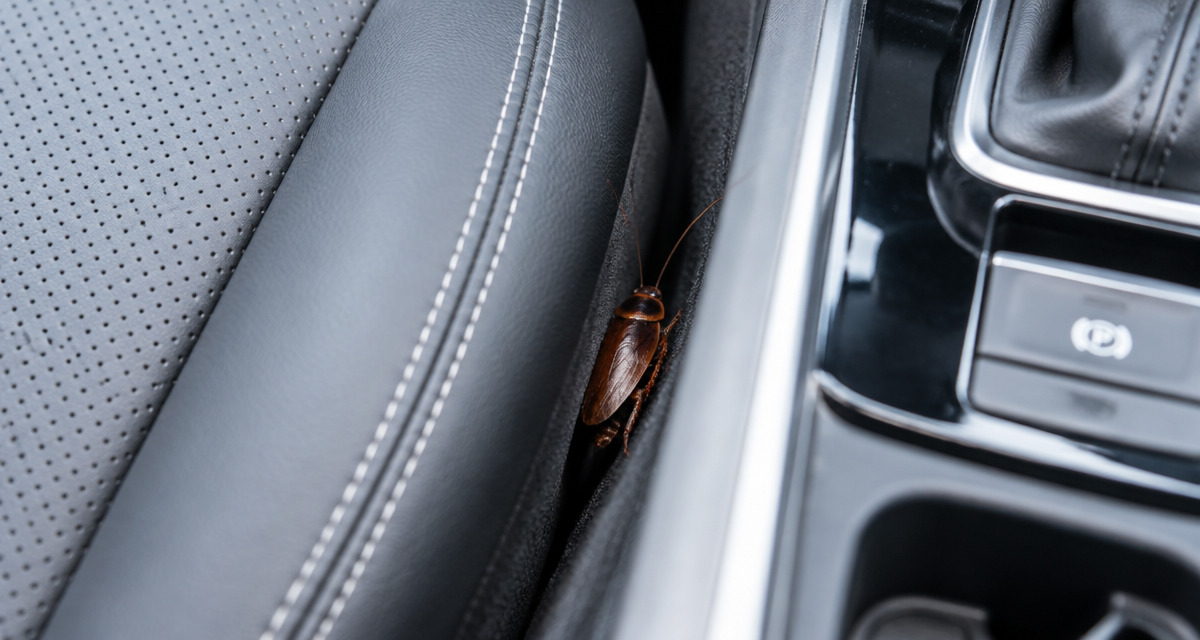
Why Cockroaches Turn Up in Grab and PHV Cars
Private hire and Grab cars see far more food debris than the average family car. Multiple passengers a day means dropped crumbs, spilled drinks, food delivery bags resting on seats or in the boot, and long shifts where a driver eats a quick meal behind the wheel. All of this builds up in small amounts that are easy to miss between trips, especially under seat rails, in door pockets, and around the boot lining where food delivery insulated bags are often stored.
Cockroaches need very little to survive — crumbs, moisture from spilled drinks, and warmth from the engine bay or a parked car under the sun are enough. Because a PHV car is almost never left idle for long, a small population can go unnoticed until a passenger spots one moving across the dashboard or under a seat.
The Real Cost of a Cockroach Sighting for a Full-Time Driver
For a private car owner, a cockroach sighting is an inconvenience. For a Grab or PHV driver, it's a business risk. A passenger who sees a cockroach may leave a low rating, mention it in a review, or report it to the platform. Screenshots travel fast, and a driver's acceptance rate or account standing can be affected by a run of complaints — even from a single incident.
There is also the immediate embarrassment and lost booking time if a driver has to pull over, clean up, or cancel a trip mid-shift because of what they've just seen crawl across the seat.
What Not To Do Before You Book Professional Help
It's tempting to reach for whatever insecticide is available, but some interim fixes create new problems for a car that needs to look and smell presentable for the next passenger within minutes.
- Don't spray household insecticide directly onto seats, the dashboard or steering wheel — many leave an oily film and a strong chemical smell that lingers for hours.
- Don't place mothballs in the cabin as a quick fix; the fumes can be noticeable and unpleasant to passengers during a ride.
- Don't ignore small brown egg casings tucked under seat rails or in door sills — these hatch and the problem returns even after you've killed the adults you saw.
- Don't rely on air freshener alone to mask an odour or hide a sighting from yourself — it doesn't address the source.
DIY Steps That Genuinely Help Between Bookings
A few habits reduce how quickly a small issue turns into a recurring one, and they cost nothing beyond a few extra minutes at the end of a shift.
- Vacuum crumbs and food wrappers out of the cabin and boot after every shift, not just once a week.
- Remove rubbish from the car immediately rather than leaving it until you're home.
- Store snacks and food delivery bags in sealed containers rather than loose on the seat or floor.
- Check under seat rails, door sills and the boot lining weekly for droppings or egg casings.
- Avoid leaving unfinished drinks or food in the car overnight, even in a cupholder.
When Professional MIRAKN Fumigation Is the Right Call
If you've seen a live cockroach more than once, spotted egg casings, or noticed a faint musty smell that cleaning doesn't remove, DIY steps alone are unlikely to solve it — the treatment needs to reach into seat frames, air-con ducting and boot cavities that a vacuum can't access.
This is where the non-oily nature of MIRAKN matters specifically for a PHV or Grab car. Traditional fogging methods can leave an oily surface film across seats, the dashboard, ceiling lining and other fixtures, which then needs to be wiped down before the car is presentable again. For a driver who wants to get back to accepting rides, that extra clean-up step is exactly what a non-oily gas treatment is designed to avoid.
How Cleanic's MIRAKN Express Fits a Driver's Schedule
Cleanic's mobile MIRAKN dry gas fumigation mobile fumigation that comes to your location, which matters when your working hours revolve around being on the road. The treatment is a dry gas application rather than a wet fogging process, so there's no oily residue to towel off the steering wheel, seats or dashboard afterwards.
At the time of writing, Cleanic is running a car fumigation cost in Singapore for a faster in-and-out treatment aimed at exactly this kind of budget-conscious, time-pressed booking — though as with any promotional pricing, availability and terms should be confirmed directly when you message us, since this is a current offer rather than a permanent price.
What Happens When You Contact Cleanic
Message us on WhatsApp with your car model, general location and a short description of what you've seen — a single roach, multiple sightings, egg casings, or an odour. We'll advise whether a standard MIRAKN treatment or the Express option suits your situation, and arrange a mobile appointment slot that works around your driving hours.
On the day, the technician performs the fumigation on-site. Because there's no oily film to clean off afterwards, there's less downtime spent detailing the cabin before your next passenger compared to some traditional fogging approaches.
FAQs
Why do cockroaches appear in Grab or PHV cars more than private cars?
Higher passenger turnover means more food debris, spilled drinks and food delivery bags pass through the cabin daily, and long shifts often mean drivers eat behind the wheel. These small, frequent traces of food and moisture are enough to attract and sustain cockroaches even when the car looks clean.
Will MIRAKN fumigation leave an oily smell that puts off my next passenger?
MIRAKN is a non-oily gas treatment, which means it does not leave the greasy surface film associated with some traditional fogging methods. This is specifically why it's suited to a car that needs to be back in service without an extended wipe-down of seats, the dashboard or ceiling lining.
How long does the treatment take and can I drive again the same day?
The MIRAKN Express option is positioned as a faster treatment for drivers who need to get back on the road quickly, but exact timing depends on your vehicle and the extent of the issue. Confirm current timing and any post-treatment steps directly with our team when you book.
Is MIRAKN safe if I regularly carry passengers, including elderly riders or those with allergies?
MIRAKN is intended to be used according to the product's normal-use instructions, and any conditional safety guidance depends on those instructions being followed. If a passenger has specific medical sensitivities, it's worth mentioning this when you book so we can advise accordingly rather than assuming a one-size-fits-all answer.
How much does cockroach fumigation for a PHV car cost in Singapore?
Pricing varies depending on the treatment type and vehicle. Cleanic currently offers a promotional MIRAKN Express price for a faster, more budget-friendly option — message us with your car details for a current quote, as promotional pricing and terms can change.
Can I just spray my own insecticide instead of booking a service?
You can, but household sprays applied directly to seats, the dashboard or steering wheel often leave an oily residue and a strong chemical smell that lingers through several passenger trips. They also rarely reach the seat frames, ducting or boot cavities where an infestation is actually living, so sightings tend to return.
Related Cleanic reading
- how to get rid of cockroaches in cars
- Grab and PHV car cleaning service
- preventing cockroach infestations in cars
- Cleanic service page
For related needs outside Cleanic's scope, see routine vehicle maintenance checks.
Got Cockroaches in Your Grab or PHV Car? Book MIRAKN Before Your Next Shift
A cockroach sighting can mean a 1-star rating, an awkward passenger complaint, or a platform report you didn't want. Cleanic's mobile MIRAKN team comes to you, treats the cabin with a non-oily gas fumigation, and works around your driving schedule so you're not sitting out longer than you have to. Message us with your car model, location and what you've noticed, and we'll advise the right slot.
WhatsApp Colin