A sewage smell in your car usually comes from a blocked AC condensate drain, mould growing in the cabin, or water intrusion after heavy rain. In Singapore’s humidity, this problem escalates fast — mould spores and bacteria begin circulating through your vents within 24 to 48 hours of the initial water or sewage exposure.
The Problem: A Smell That Stops You in Your Tracks
You open the car door and the smell hits you immediately — damp, sulphurous, unmistakably sewage-like. Or it only appears when you turn the AC on, suggesting the source is buried deep inside the ventilation system. Either way, the experience is unpleasant and, depending on the cause, potentially harmful to your health.
Singapore’s tropical climate makes cars especially vulnerable to this problem. High ambient humidity, frequent heavy rain, and limited parking ventilation create the perfect conditions for mould, bacterial growth, and stagnant water to develop inside a vehicle’s cabin.
Common Causes of a Sewage Smell in Your Car
- Blocked AC condensate drain: The air conditioning system removes moisture from cabin air and channels it out via a drain tube. When that drain is blocked, water pools in the drip tray and begins to stagnate — producing a foul, sewer-like odour that comes straight through your vents.
- Mould and bacteria on the AC evaporator: Singapore’s humidity means evaporator coils are almost always damp. Without regular treatment, mould colonies develop on the coil fins and release musty, sewage-adjacent odours every time the fan runs.
- Rainwater intrusion or flooding: After a severe downpour, water can enter the cabin through door seals, a blocked sunroof drain, or a windscreen gasket leak. If the carpet soaks up that water and is not dried within 24 hours, bacterial decomposition begins — and the smell resembles a blocked drain.
- Dead pest in the engine bay or venting ducts: A rat, lizard, or small bird that has died inside the car can produce decomposition odours that travel through the ventilation system. This type of sewage smell is accompanied by a sweet-rotting note and typically intensifies with heat.
- Road sewage splash: Driving through flooded roads can force contaminated water into the undercarriage, wheel wells, and occasionally through cabin drainage paths. If that water contains sewage — common in flash flood conditions near older HDB drains — the odour can linger for days.
Risks of Ignoring a Sewage Smell
The smell itself is the least of your problems. Mould spores and bacteria in your car’s ventilation system are airborne every time the AC runs. Prolonged exposure can cause respiratory irritation, sinus infections, and worsening symptoms in allergy or asthma sufferers. Colin has attended vehicles where the owners had been experiencing recurring headaches and blocked sinuses — traced directly back to a mould-contaminated evaporator.
If a dead pest is the cause, decomposition bacteria and the risk of secondary infestation (flies, maggots) make it a genuine health hazard that requires immediate professional attention. Learn more about dead animal smell in car — a separate but related issue Colin handles regularly.
How Cleanic Detailing Inspects and Treats It
Colin’s process begins with a full inspection to identify the source — not just spray a fragrance and call it done. Every case is different, which is why Cleanic Detailing’s 24/7 mobile service is designed for thorough, on-site diagnosis and treatment.
Step 1 — Source identification: Colin checks the AC drain outlet, inspects the carpet for moisture, and examines the duct entry points for evidence of a trapped pest.
Step 2 — Industrial steam treatment: The hot dry steam cleaning service at up to 200°C penetrates seat foam, carpet backing, and trim panels. At that temperature, mould colonies, bacteria, and odour-causing compounds are broken down at the molecular level — no chemicals, no residue, safe for children and pets. From SGD $148.
Step 3 — Disinfection wipedown: All hard surfaces — dashboard, door panels, AC vents — are wiped with professional-grade disinfectant treatment to eliminate surface bacteria.
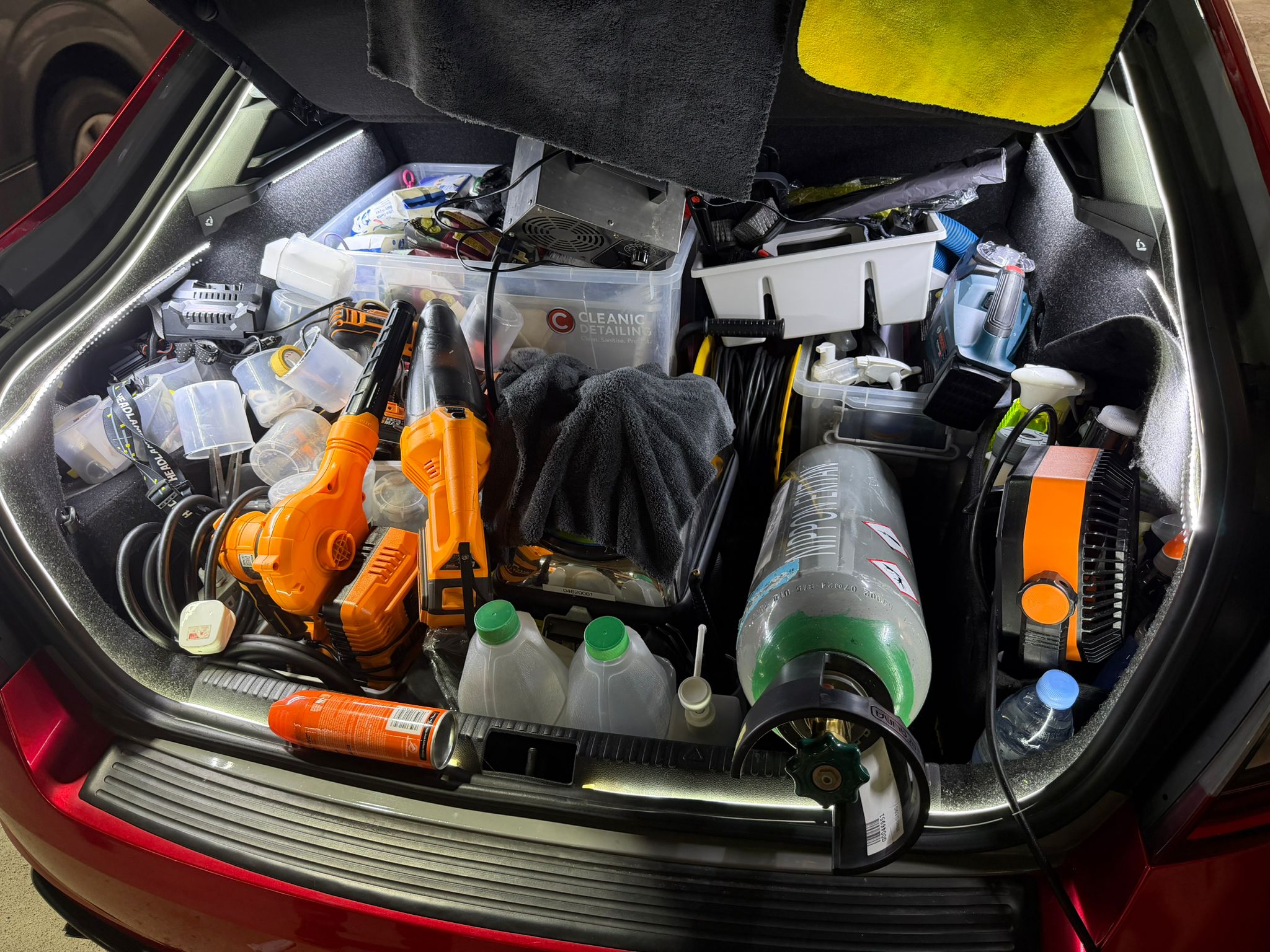
Step 4 — MIRAKN® dry gas fumigation (if pest-related): If the source is a dead or live pest, the MIRAKN® CO₂ dry gas system is applied. CO₂ gas is 1.5× heavier than air — it sinks into footwells, vent ducts, and seat foam, eliminating any surviving pests and neutralising biological odours. Zero residue, zero odour post-treatment, safe for luxury interiors and electronics. Price: SGD $180 for licensed pest fumigation.
For AC-specific mould and mildew odours, read the detailed guide: car aircon smells bad Singapore.
Key Facts
- Most common cause: Blocked AC condensate drain or mould on the evaporator — both treatable in one visit
- Time to treat: Steam clean + disinfection takes approximately 1–2 hours on-site
- Cost: Steam cleaning from SGD $148; pest fumigation (MIRAKN®) SGD $180
- Health risk: Mould spores and bacteria in cabin air are a real respiratory hazard in Singapore’s climate
- MIRAKN® advantage: CO₂ dry gas reaches hidden cavities where steam cannot — ideal for pest-related sewage odours
- No chemicals: Cleanic Detailing’s steam method is organic and chemical-free — safe for children, pets, and pregnant women
- Availability: 24/7 mobile, island-wide Singapore — no booking form, WhatsApp Colin directly
FAQs
Why does my car smell like sewage when I turn on the AC?
The most likely cause is mould or bacteria growing on your AC evaporator coil, or a blocked condensate drain that has allowed water to stagnate. In Singapore’s humid climate, this can develop within weeks of the initial moisture buildup. A professional steam and vent treatment resolves it. Call Colin at 9108 6931 for same-day assessment.
How much does it cost to remove a sewage smell from a car in Singapore?
Steam cleaning to address mould, bacterial odour, and water-related smells starts from SGD $148. If a dead pest is involved, MIRAKN® dry gas fumigation is SGD $180. Colin will assess on arrival and recommend the correct treatment — no hidden charges.
Is a sewage smell in my car dangerous?
Yes, if left untreated. Mould spores and airborne bacteria from a contaminated ventilation system can cause respiratory irritation, sinus infections, and allergy flare-ups. If the smell is from decomposition (dead pest or sewage water), there is also a risk of secondary bacterial exposure. Get it treated promptly.
Can I just use an air freshener to cover the sewage smell?
No. Air fresheners only mask the odour — they do nothing to eliminate the mould, bacteria, or biological matter causing it. The smell returns within hours or days. Professional steam treatment and disinfection is the only method that removes the source. Attempting to cover a sewage smell with fragrance can also attract more pests.
Real Customer Case: Woodlands HDB After Flash Flood
A car owner from Woodlands contacted Colin after a flash flood had pushed water into his Toyota Vios while it was parked in an open-air lot. Within 48 hours, the cabin smelled like a blocked drain — damp, sulphurous, unmistakable. The carpet had absorbed significant moisture and the AC was blowing the smell directly at the driver.
Colin arrived within the hour. Inspection confirmed severe mould growth beginning under the rear carpet and bacteria accumulation on the evaporator. A full hot steam extraction was performed on the seats and carpet, followed by vent disinfection and an evaporator treatment. The sewage smell was eliminated entirely in a single visit. No chemicals. No recurring odour.
If your car has been through a similar situation — flooding, heavy rain intrusion, or an unexplained sewage odour — do not wait. The longer mould is left untreated in Singapore’s climate, the harder it is to remove. See also: rotten smell in car Singapore and car mould removal Singapore for related issues.
For a full overview of interior cleaning services and pricing, visit the car interior cleaning Singapore guide or the Cleanic Detailing homepage.
Contact Colin at 9108 6931 — WhatsApp or call, 24/7, island-wide Singapore.