If your car interior always feels damp, even with the windows up and aircon running, you have a moisture problem that will not go away on its own. In Singapore’s year-round humidity of 85–90%, a damp car cabin is the single fastest route to mould growth, musty odours, and permanent damage to seat foam and carpet padding. The good news is that car interior dampness is fixable — but only when you identify and treat the root cause properly.
The Problem: A Car Interior That Never Fully Dries Out
Most Singapore drivers first notice the dampness as a slightly musty smell when they enter the car. Within days, it escalates to visible condensation on windows, a soggy feel underfoot, and eventually, white or black mould spots on seats, door panels, or the headliner. Because Singapore’s climate gives mould exactly what it needs — heat, moisture, and organic material — a damp interior left untreated can show visible mould within 48–72 hours.
The frustrating part is that many owners try to dry the car out by running the aircon, parking in the sun, or placing silica packs inside — and still find the dampness returns. That’s because they’re treating the symptom, not the source.
Common Causes of a Damp Car Interior
- Blocked AC condensation drain: The most common cause. Your aircon evaporator produces condensation as it cools the cabin air. This water drains out through a small pipe under the car. When that pipe gets clogged with dirt or debris, water backs up and collects under the dashboard or in the footwell carpet — invisible until you notice the damp.
- Window or door seal leaks: Rubber seals around doors, windows, and sunroofs degrade over time. A tiny gap allows rain or carpark wash water to seep in slowly, saturating the carpet padding below the surface without leaving an obvious wet patch on top.
- Sunroof drain tubes: Sunroof-equipped cars have internal drain tubes running down the A-pillars. If these tubes crack or detach, water drips directly into the headliner and down into the cabin.
- Spills that were not fully dried: A spilled drink or wet clothing left on the seat can saturate the seat foam and carpet backing in minutes. Surface drying does nothing for what’s below.
- Singapore’s humidity itself: In an older car with worn seals and a struggling aircon, ambient humidity alone can raise the moisture level inside the cabin to the point where condensation forms on cool surfaces overnight.
Risks of Ignoring a Damp Car Interior
Damp interiors in Singapore’s climate are not a cosmetic issue. Mould spores are respiratory irritants — breathing mouldy cabin air regularly can trigger allergic reactions, asthma flare-ups, and chronic sinus inflammation. Mould also damages upholstery permanently: once foam is saturated and mould has colonised the fibres, surface cleaning is no longer enough. Full seat replacement can cost SGD $500–$1,500 per seat. Early treatment costs a fraction of that.
How Cleanic Detailing Inspects and Treats a Damp Car Interior
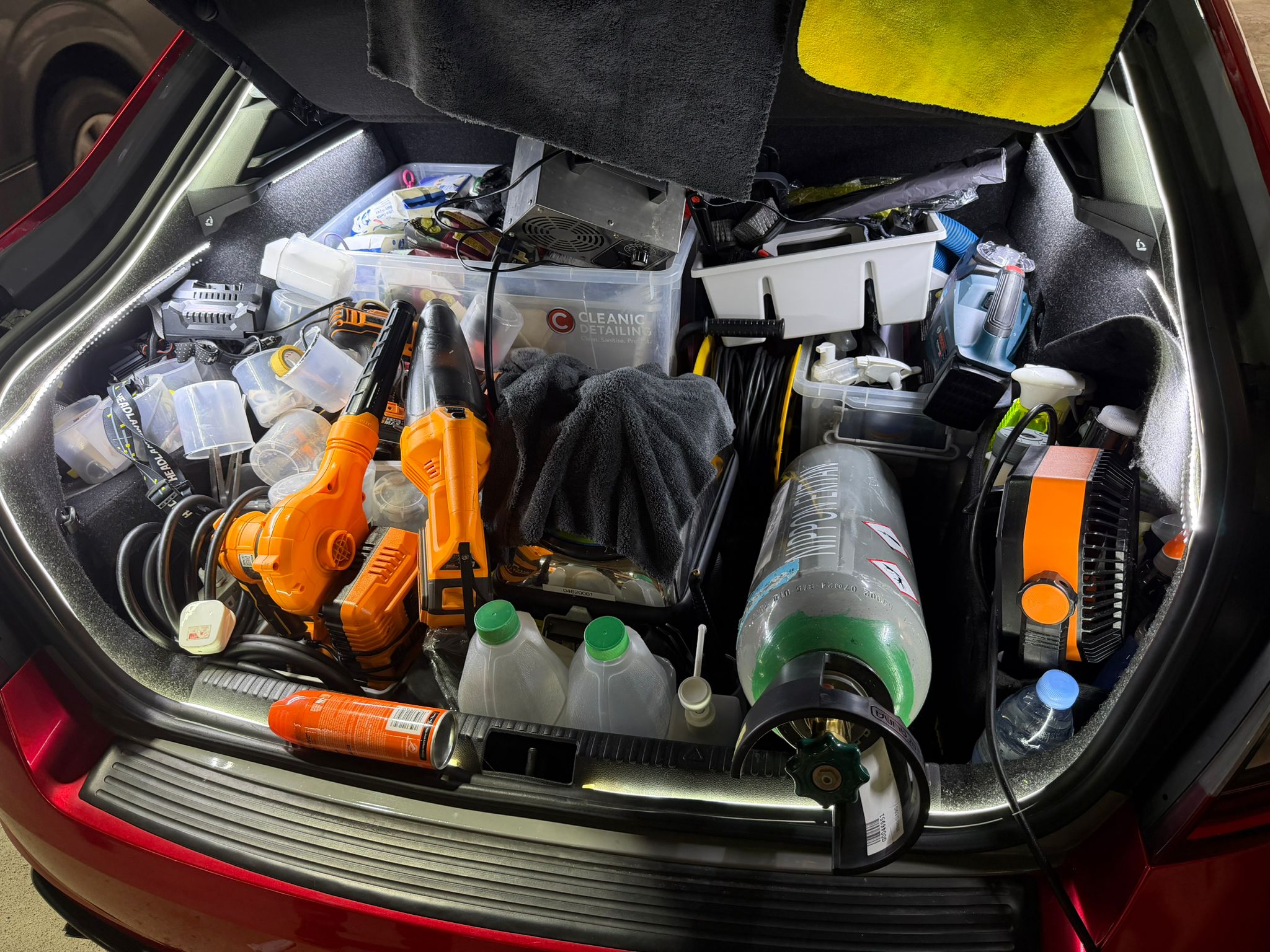
Colin’s process at Cleanic Detailing begins with a systematic inspection to locate the moisture source — blocked drain, seal failure, or residual spill. Once identified, treatment uses two complementary technologies:
Industrial hot steam cleaning at up to 200°C penetrates seat foam, carpet pile, door card fabric, and boot lining to extract moisture, kill mould spores on contact, and neutralise the bacteria causing the musty smell. Unlike a wet shampoo method, high-temperature dry steam evaporates rapidly and does not re-wet the interior.
Where mould has reached interior cavities — seat rail channels, under-carpet padding, footwell voids — MIRAKN® CO₂ dry gas fumigation delivers a penetrating, residue-free treatment that reaches spaces no steam nozzle or brush can access. The CO₂ gas is 1.5× heavier than air, so it sinks into the very footwell and cavity areas where moisture tends to collect and mould hides. Zero residue. Zero odour. Safe for children’s car seats and sensitive electronics.
After treatment, Colin checks the interior is thoroughly dry before the owner drives away. A 30-day follow-up guarantee is standard on mould treatment jobs — if the smell returns within 30 days, Cleanic Detailing returns at no charge.
Key Facts
- A car interior always damp in Singapore is almost always linked to a blocked AC drain, a seal leak, or an unresolved spill
- Mould can establish itself in a damp car interior within 48–72 hours in Singapore’s climate
- High-temperature steam cleaning (200°C) kills mould spores and bacteria on contact without harsh chemicals
- MIRAKN® CO₂ dry gas reaches cavities and voids that surface cleaning cannot access — zero residue
- Treating damp interiors early costs far less than replacing mould-damaged seats or carpet
- Cleanic Detailing is a licensed, certified MIRAKN® applicator and offers 24/7 mobile service island-wide
- HOT DRY Steam Cleaning starts from SGD $148; car mould treatment is quoted based on scope
FAQs
Why does my car interior feel damp even when it hasn’t rained?
The most likely cause is a blocked AC condensation drain. Your aircon generates water as it cools the cabin — that water normally drains out below the car. When the drain is blocked, it backs up and soaks into the footwell carpet, creating persistent dampness that has nothing to do with rain. A technician can clear the drain and then Cleanic Detailing can treat any resulting mould or odour.
How much does car interior damp treatment cost in Singapore?
Cleanic Detailing’s HOT DRY Steam Cleaning service starts from SGD $148 and covers the full interior. Where mould has developed, a combined steam plus MIRAKN® fumigation treatment applies — pricing depends on the extent of mould colonisation. WhatsApp Colin at 9108 6931 for a fast quote.
Can I dry out a damp car interior myself?
Surface drying with towels or silica packs will not reach the moisture trapped in carpet padding or seat foam. Running the aircon helps circulate air but does not kill existing mould spores or remove the odour-causing bacteria already established in the fabric. Professional steam extraction is the only reliable way to remove deep-set moisture and prevent mould from returning.
How long does the treatment take?
A full steam cleaning and mould treatment typically takes 1–2 hours depending on the vehicle size and the extent of the damp. Cleanic Detailing is fully mobile — Colin brings all equipment to your carpark, HDB void deck, or office and completes the treatment on-site. No need to drop the car off anywhere.
Real Customer Case
A Toyota Wish owner from Sengkang contacted Cleanic Detailing after noticing her car carpet was always damp underfoot on the driver’s side, even in dry weather. She had placed silica packs and left the windows slightly open overnight — no improvement. Colin inspected and found the AC condensation drain was fully blocked, causing water to pool under the driver’s footwell carpet for weeks. The carpet padding had already developed a musty mould smell.
Colin cleared the drain and then performed a full hot steam extraction treatment on the carpet, footwell, and front seat. MIRAKN® dry gas treated the under-seat cavities and door card voids. By the time the service was complete, the interior smelled fresh and the dampness did not return. Total time on-site: under 90 minutes.
If you’re dealing with a similar problem, early treatment like this avoids the far greater cost of replacing a mould-damaged wet carpet.
Related Guides
If you’ve been dealing with a damp interior, you may also want to read about water leaking into your car (common seal and sunroof issues), what to do if your car got flooded inside, or how a bad-smelling car aircon is often connected to the same moisture problem. For general interior hygiene and mould prevention, our full interior cleaning guide covers all the options. You can also book car fumigation or learn about MIRAKN® dry gas technology if pests are also a concern alongside the damp.
Contact Colin at 9108 6931 — WhatsApp or call, 24/7, island-wide Singapore.